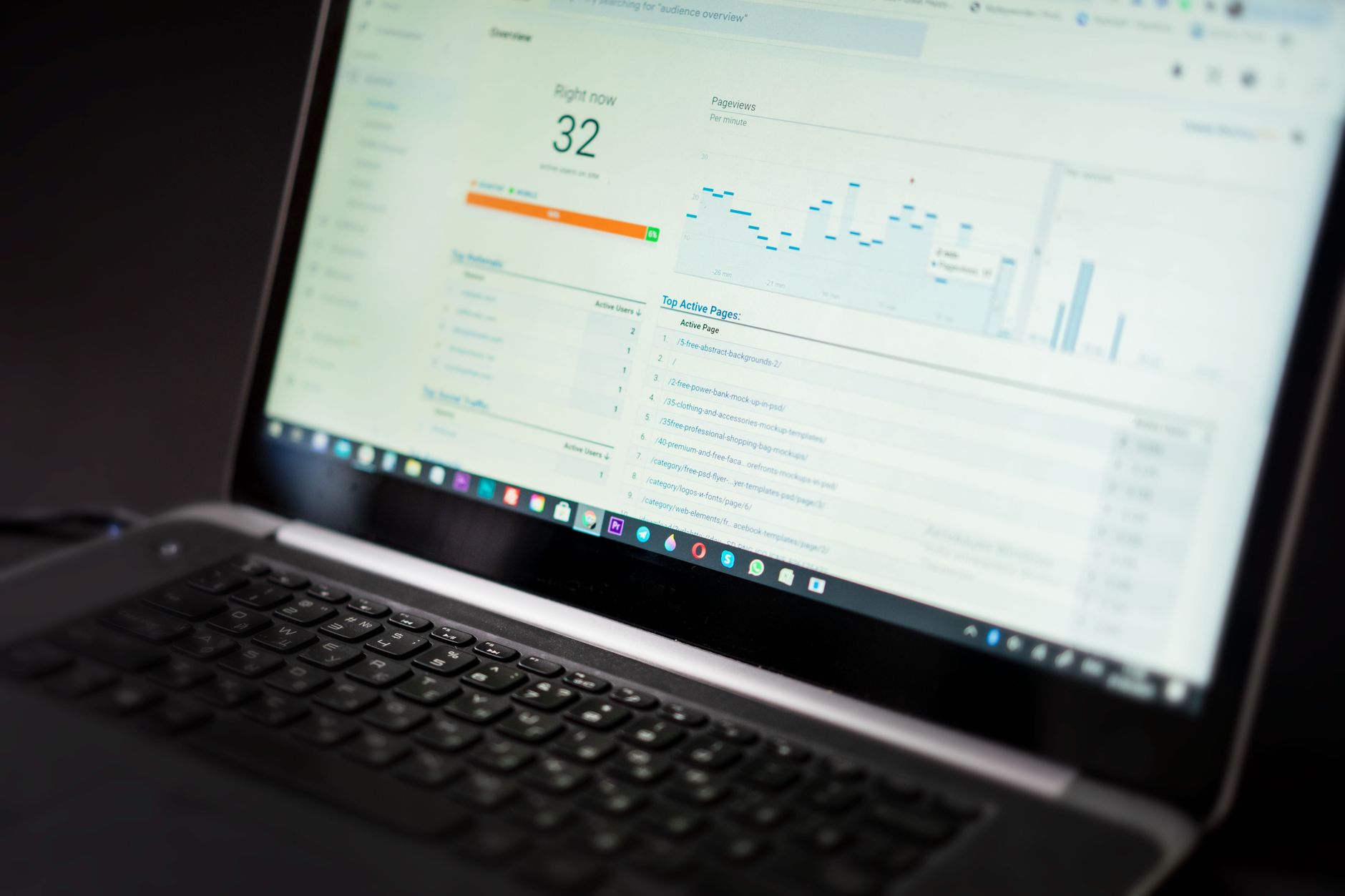
Most SME owners who adopt AI do it on instinct: they try a tool, it seems useful, and they carry on using it. That’s not a bad start, but it leaves a real question unanswered — is this actually making money for the business? Knowing how to measure the return on your AI investment, even with a modest setup and no data science team, is what turns a useful experiment into a confident, repeatable strategy.
Why Measuring AI ROI Feels Hard (But Isn’t)
The hesitation usually comes from the word “ROI” itself. It conjures spreadsheets, dashboards and someone in a corner office doing financial modelling. For a small business running lean, that sounds out of reach. But measuring AI return doesn’t require any of that. It requires you to answer three simple questions before you start using any tool: What are you hoping to improve? How will you know it’s improved? And what does that improvement mean in money or time?
If you’re using an AI writing assistant to speed up blog posts, the metric is time per post before and after. If you’ve added a chatbot to your enquiry page, the metric is how many more enquiries convert to bookings. Those are straightforward comparisons you can track in a spreadsheet or even a notebook. The goal isn’t precision to two decimal places — it’s enough signal to decide whether to invest more, adjust, or stop.
It also helps to remember that most AI tools used by SMEs are either free or inexpensive at the entry level. The cost side of the ROI equation is often quite small. That means even a modest improvement in output or efficiency tips the ratio in your favour quickly.
What Does AI ROI Actually Look Like for a Small Business?
AI return for an SME falls into three categories: time saved, revenue influenced and cost avoided. Most tools touch at least one of these; the best ones touch two.
Time saved
This is the most immediate win. If an AI tool cuts the time you spend on a weekly task from three hours to forty-five minutes, that’s more than two hours of staff or owner time redirected to higher-value work. Multiply that across the year and you get a meaningful number. You don’t need to assign an exact hourly rate to feel the benefit — but if you do want to, use a realistic figure for the person doing the task, not the lowest possible wage.
Revenue influenced
This is slightly harder to isolate, but not impossible. If you’re using AI to personalise follow-up emails to enquiries and your conversion rate from enquiry to booking improves, that’s revenue influenced by the tool. You’re not claiming the AI did everything, but you can reasonably attribute a share of the improvement to the change you made. For more on converting local enquiries effectively, our guide on local enquiry follow-up and converting leads to bookings is a useful companion read.
Cost avoided
If an AI tool handles tasks that would otherwise require an extra hire, a freelancer or an agency retainer, the avoided cost is real return. A small business using an AI assistant to draft social media posts, repurpose newsletters and answer common customer questions via a trained chatbot may be avoiding the cost of a part-time marketing assistant. That’s a legitimate and significant saving.
Setting a Baseline Before You Start
This is the step most SMEs skip, and it’s the one that matters most. If you don’t know where you started, you can’t measure how far you’ve come. Before you switch on any new AI tool, spend fifteen minutes recording your current baseline for the task it’s meant to improve.
- How long does the task take now, on average?
- How often does it happen per week or month?
- What does the output look like (volume, quality, error rate)?
- What’s the current conversion rate, response time or cost, if relevant?
Write it down somewhere you can find it in thirty days. A simple notes document or a shared spreadsheet is fine. The point is to create an honest “before” picture so that the “after” is meaningful. Without it, you’ll be left with a vague feeling that things seem better, which doesn’t help you make investment decisions or justify the spend to a business partner or board.
The same logic applies whether you’re using an AI content tool, an automated scheduling system, a sales assistant or an AI-powered customer support chatbot. Baseline first, then deploy.
Which Metrics to Track for Common AI Use Cases
Different tools call for different measures. Here’s a practical guide for the most common SME use cases.
AI for content and marketing
Track the time taken to produce each piece of content and the volume you’re publishing per month. After a month of using an AI writing assistant, compare both. Also look at engagement signals — are the pieces getting clicks, shares or enquiries? If you’re using AI to power your email marketing, track open rates and click-through rates before and after you introduce AI-drafted subject lines or body copy.
AI for customer support
Track first-response time, the number of support queries handled without human escalation, and customer satisfaction signals (reviews, repeat bookings, direct feedback). A chatbot that deflects a meaningful share of repetitive questions frees your team for the interactions that actually require a human. Even a rough count of how many enquiries are resolved automatically versus manually gives you useful signal.
AI for sales and lead generation
Measure conversion rates at each stage of your pipeline. If AI is helping you qualify leads faster, score them or personalise outreach, you should see improvement in the ratio of leads to conversations and conversations to sales. Our earlier piece on AI for sales and lead generation on a low budget goes deeper on this if you want a more detailed framework.
AI for admin and operations
Count the hours per week spent on the admin task before and after. Scheduling, invoice drafting, data entry, summarising meeting notes — these are all time-bounded tasks where measurement is straightforward. If the task previously took four hours a week and now takes one, you have three hours back. Put a realistic cost on that time and you have your return.
How Long Should You Wait Before Judging Results?
Give any new AI tool at least four weeks before drawing conclusions. Some tools have a learning curve, some workflows need adjustment, and some results (particularly in marketing or sales) take time to show up in the data. One bad week doesn’t tell you much. A month of data, compared honestly to your baseline, usually does.
That said, if after two weeks a tool is creating more work than it saves, that’s a valid early signal. Not every tool suits every business. The openness to stop and try something else is itself part of a sensible low-budget AI strategy. Tools from providers like OpenAI and Google AI often have free tiers that let you test properly before committing to any paid plan, which makes this kind of trial-and-adjust approach very practical.
Also worth noting: some ROI shows up in ways you didn’t anticipate. A tool adopted for one purpose might turn out to deliver its biggest value somewhere else. Stay open to that. The business owner who tracks carefully is the one who spots it.
Communicating AI ROI to Stakeholders or a Business Partner
If you have investors, a co-founder or a board you report to, framing AI spend as an investment with measurable return makes the conversation much easier. You don’t need a formal report. A simple one-page summary works well: what the tool costs, what task it addresses, what the baseline was, what it is now, and what that difference represents in time or money.
For businesses in sectors where operational efficiency is increasingly scrutinised by acquirers or investors (professional services, health and wellness, local services), demonstrating that you’ve adopted AI with measurable discipline can be a genuine value driver. If you’re thinking about the bigger picture of business value, it’s worth reading alongside our guide to business valuation methods for UK buyers, which covers how operational strength and margin efficiency factor into acquisition assessments.
Common Pitfalls When Tracking AI ROI in Small Businesses
A few patterns trip SMEs up repeatedly when they try to measure AI return.
- Measuring too many things at once. If you introduce three AI tools in the same month, you won’t know which one produced which result. Roll out one tool at a time where possible.
- Forgetting the hidden time cost. Every new tool has an adoption overhead — setting it up, learning it, adjusting it. Factor that time into your ROI calculation for the first month, or you’ll overstate the return early on.
- Confusing activity with outcome. Producing twice as many blog posts with AI assistance doesn’t mean twice the value, if the posts aren’t driving traffic or enquiries. Always tie output metrics back to business outcomes.
- Not revisiting the numbers. Set a monthly or quarterly reminder to check in on your AI tools and re-run the comparison. What delivered strong return in month one may plateau — or may compound positively over time. Either way, you want to know.
For a broader overview of the tools worth considering in the first place, our practical low-budget AI starter guide for SMEs covers the landscape clearly without the technical overwhelm.
Key Takeaways
- Measuring AI ROI doesn’t require technical expertise — it requires a clear baseline, a specific metric, and a consistent check-in routine.
- The three categories of AI return for SMEs are time saved, revenue influenced and cost avoided; most tools deliver in at least one of these areas within a few weeks.
- Always set a baseline before deploying any new AI tool, and give it at least four weeks before drawing firm conclusions.
- Roll out tools one at a time so you can attribute results clearly, and revisit the numbers regularly to catch what’s working and what isn’t.
Frequently Asked Questions
How quickly should I expect to see ROI from an AI tool as an SME?
For time-saving tools like AI writing assistants or admin automation, most SMEs see measurable return within the first four weeks. Tools that influence revenue (such as AI-driven follow-up sequences or lead scoring) often take six to eight weeks to show clear results, because sales cycles and customer behaviour take time to shift. Setting a clear baseline before you start makes it much easier to spot progress early.
Do I need to track AI ROI formally, or is a rough sense enough?
A rough sense is a start, but it won’t help you make confident decisions about scaling spend or switching tools. Even a simple before-and-after comparison in a spreadsheet — covering time per task, conversion rates or monthly output — gives you enough structure to make informed choices. The more deliberate your tracking, the more confidently you can invest or adjust.
What if the AI tool I’ve adopted doesn’t seem to be delivering return?
First, check whether you’ve given it enough time and whether the adoption overhead is distorting early results. If the numbers still aren’t moving after four to six weeks, the tool may not be the right fit for your workflow, or the task it addresses may not be the highest-value place to apply AI in your business. Most AI tools at the SME level are low-cost or free to trial, so stopping and redirecting is a low-risk decision.
Can I include AI ROI in a business valuation or investor conversation?
Yes, and increasingly acquirers and investors are interested in operational efficiency driven by technology. Being able to show that you’ve adopted AI tools with measurable impact on margins, output or staff productivity is a genuine positive in a due diligence or investment conversation. Frame it in terms of cost per output, staff time freed, or conversion improvements — concrete metrics carry more weight than general claims about being “AI-enabled”.
If you’d like a free AI quick-wins assessment for your business, including a practical, low-budget roadmap tailored to where you are now, get in touch with the B4Mind team and we’ll take it from there.