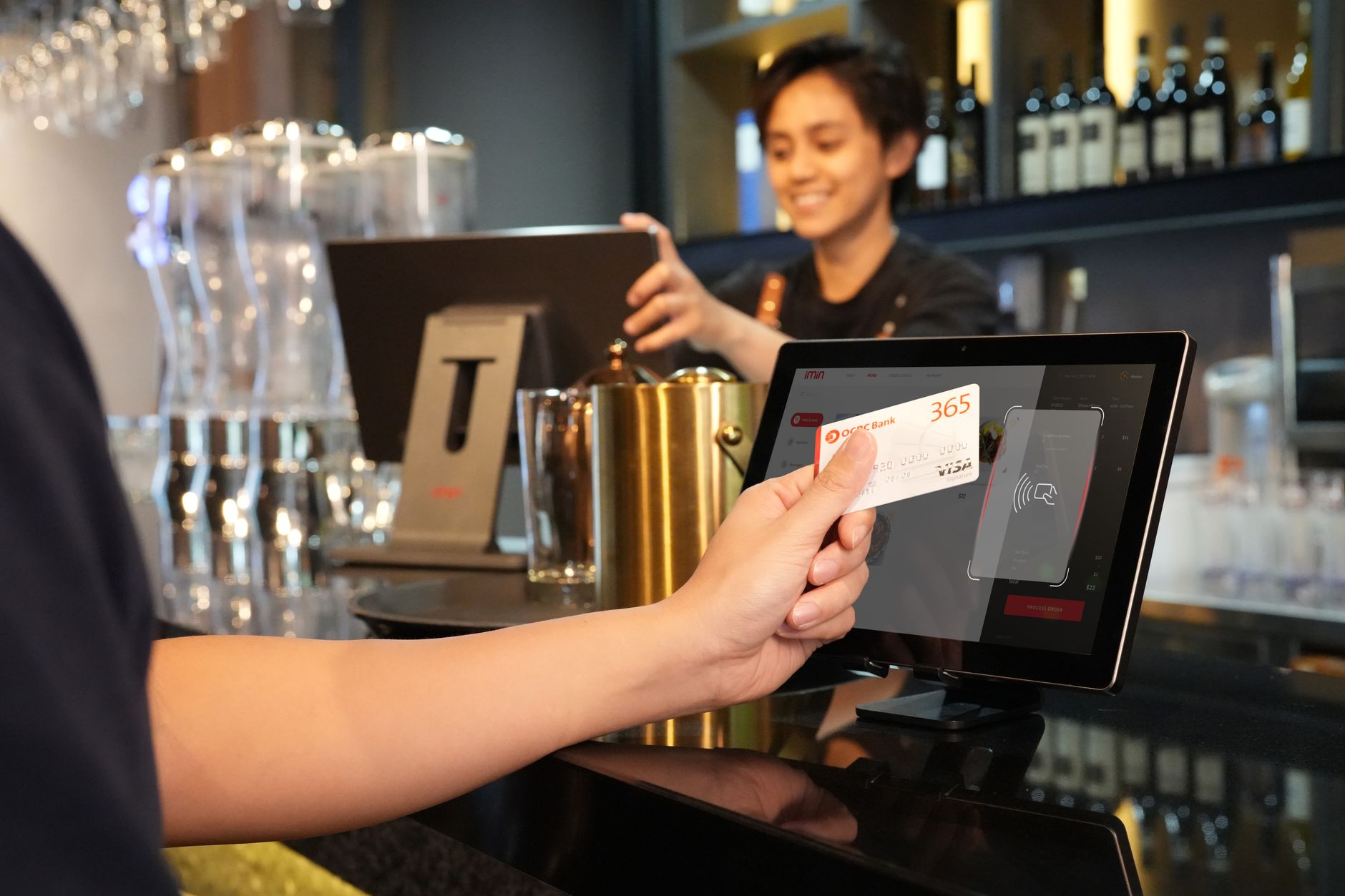
Most people thinking about hospitality investment focus on the venues themselves: hotels, restaurants, pubs, event spaces. Far fewer look one level up, at the software and technology layer that now sits underneath almost every UK hospitality business. That layer is growing fast, remains deeply fragmented, and is increasingly where the durable margin lives.
What Is Driving Demand for Hospitality Technology in the UK Right Now?
Demand for hospitality technology is being driven by a combination of structural cost pressure and rising customer expectations, and the two forces are feeding each other. Wage inflation, energy costs and food price volatility have compressed operating margins across UK hospitality over the past several years. Operators who once managed on spreadsheets and legacy tills are now actively shopping for systems that reduce labour dependency, improve yield and give them real visibility of their numbers.
At the same time, consumers have come to expect the kind of frictionless digital experience they get from other sectors: mobile ordering, loyalty apps, instant booking, personalised offers. Hospitality businesses that cannot deliver this risk losing market share to better-equipped competitors. The result is a wave of genuine technology adoption that is no longer driven by enthusiasm for innovation but by commercial necessity.
The UK market has a particular characteristic that amplifies this: a very large SME tail. Thousands of independent restaurants, hotel groups with five to fifteen sites, pub companies, event caterers and stadium operators all need broadly the same core technology stack (property management, point of sale, reservations, workforce management, analytics) but lack the internal capability to evaluate, implement and integrate it properly. That gap creates sustained demand not just for software but for implementation and managed service providers sitting alongside it.
It is also worth noting the post-pandemic structural shift in how hospitality businesses think about technology. Having survived a period of near-zero revenue, operators came out of the pandemic with a far clearer understanding of which costs were fixed and which were variable, and which technology investments had actually paid back. Adoption cycles have compressed as a result.
Fragmentation and the Consolidation Opportunity
The UK hospitality technology landscape is genuinely fragmented. There are dozens of point-of-sale providers, booking engines, property management systems, workforce scheduling tools, kitchen display providers and loyalty platforms all serving broadly the same operator base, often with no integration between them. An independent restaurant group with ten sites might be running three or four disconnected systems, losing data at every handoff and paying separately for each.
This creates a clear roll-up logic. A consolidator that acquires two or three complementary point solutions, integrates them into a coherent platform, and then cross-sells across a combined customer base can achieve meaningful revenue synergies without needing to build anything from scratch. The target businesses tend to be founder-owned, capital-light (software businesses with largely recurring revenue), and often under-invested in sales and marketing because the founder grew the business on referrals and relationships.
There are a few archetypal targets worth understanding:
- Vertical SaaS businesses serving a specific niche within hospitality (e.g. golf club management, event venue booking, marina and leisure park PMS) with sticky recurring revenue but limited growth ambition from the current owner
- Legacy POS or EPOS providers with a large installed base of hardware-tied customers who are candidates for migration to cloud-based SaaS models under new ownership
- Managed service and integration businesses that deploy and support third-party technology for operator groups, generating recurring support revenue with high retention
- Loyalty and CRM platform providers with deep data assets and operator relationships but thin sales teams
The strategic acquirer thesis is straightforward: own the data layer across multiple touchpoints in a hospitality business’s operation, and you become very hard to displace. This is broadly analogous to the consolidation dynamics you see in adjacent sectors. If you are already tracking similar patterns in adjacent spaces, the analysis in our UK B2B SaaS investor briefing provides useful context on valuation benchmarks and integration considerations.
Margins and Unit Economics: What to Expect
Vertical SaaS businesses serving hospitality can carry strong gross margins, often well above those of the operators they serve. A well-run cloud-based booking or property management platform with genuine recurring revenue and low churn is a high-quality asset. The challenge is that many businesses in this space sit in a middle ground: they have recurring contract revenue but also a meaningful professional services tail (implementation, training, custom development) that depresses blended margins and makes growth capital-intensive.
For managed service and integration businesses, the economics look different again. Margins tend to be lower than pure SaaS, but revenue is sticky and the customer relationships are deep. These businesses often have low customer acquisition cost because contracts are won through tender or referral, but growth is constrained by the headcount required to deliver.
A few pointers on unit economics due diligence in this sector:
- Understand the split between recurring software revenue and one-off professional services revenue; these should be valued and projected separately
- Scrutinise net revenue retention: do existing customers expand their spend over time, or does ARR sit flat?
- Check contract length and renewal mechanisms; annual contracts with auto-renewal clauses are materially more valuable than month-to-month arrangements
- Assess hardware dependency; businesses tied to proprietary hardware estate carry inventory risk and a more complex upgrade cycle
- Look at support ticket volume and resolution time as a proxy for product quality and customer satisfaction
Our detailed guide on what due diligence really covers in a UK acquisition is worth reading before you begin any formal process in this sector, particularly for the contract and revenue quality workstreams.
Barriers to Entry and Key Risks
The hospitality technology market is not without its complications. Integration complexity is perhaps the most underappreciated risk. Hospitality operators run a wide variety of underlying systems, many of them legacy, and achieving clean data flow between them requires sustained engineering investment. Acquirers who underestimate this consistently find that promised cross-sell synergies take far longer to realise than the investment case assumed.
Customer concentration is another common issue. A software business with a large share of its revenue tied to two or three major accounts is far more exposed than its headline metrics suggest. In hospitality technology specifically, winning a major contract from a pub group or hotel chain can look transformative, but if that customer represents a disproportionate share of ARR, the business carries significant renewal risk.
The broader hospitality sector is also cyclically sensitive. A prolonged economic downturn that forces widespread restaurant and hotel closures would create churn in the technology businesses serving them, even if the technology itself is genuinely valuable. This is less of a structural concern for a buy-and-build investor with a medium-term horizon, but it matters for sizing leverage in any acquisition structure.
Regulatory risk is relatively limited in this part of the market, but data privacy obligations under UK GDPR are material given how much personal and transactional data hospitality technology businesses handle. Any target with weak data governance processes should be treated with caution. The Financial Conduct Authority and UK government guidance on data protection provide useful baseline framing for this risk workstream.
What Makes a Strong Acquisition Target in This Sector?
The best targets combine a defensible customer base with a product that is genuinely embedded in day-to-day operations, not a peripheral reporting tool that gets cancelled when budgets tighten. Think about a kitchen management system that sits between the front-of-house POS and the back-of-house stock system: remove it and the kitchen breaks down. That is the level of operational integration that creates real switching cost and durable retention.
Beyond product stickiness, the strongest targets share a few other characteristics:
- A clear vertical focus rather than horizontal sprawl; businesses that have tried to serve everyone typically serve no one particularly well
- A founder or management team with deep sector relationships that can be retained through a properly structured earnout
- Documented processes and support infrastructure that do not depend on a single person to function
- An addressable cross-sell opportunity that is real but has not been pursued, typically because the business has been resource-constrained on sales
- A codebase that is maintainable and scalable, not a custom legacy system requiring wholesale re-platforming
If your investment thesis is platform-oriented rather than single-asset, sequencing matters. The first acquisition should ideally be the one with the most defensible recurring revenue and the cleanest data architecture, because every subsequent acquisition will need to connect to it.
How Should a Smart Investor Position in This Market?
The most effective positioning combines a clear vertical thesis with genuine sector knowledge. Generic technology consolidators can buy hospitality software businesses, but the ones that achieve the best outcomes tend to have credibility with hospitality operators and an understanding of how their businesses actually work. That credibility accelerates integration, reduces customer churn post-acquisition and makes cross-sell conversations far easier.
On the question of build versus buy: in this sector, buy is almost always faster and lower risk. Building a hospitality technology product from scratch and winning market share against established, embedded competitors is a long, expensive process. Acquiring a business that already has a paying customer base and recurring revenue allows you to focus capital on growth rather than product development. You can read more about how this logic plays out across the broader market in our briefing on UK professional services sector investment, where similar buy-and-build dynamics apply.
From a financing perspective, the recurring revenue profile of SaaS-oriented targets in this sector makes them good candidates for a mix of equity and modest debt. Lenders with experience in software or technology businesses will underwrite against ARR with the right structure in place. Be cautious about over-leveraging businesses that still carry a significant professional services revenue component, as that revenue is less predictable and harder to service debt against.
Finally, consider the exit landscape. Strategic buyers from the broader enterprise software and payments space are active acquirers in UK hospitality technology. The sector also attracts attention from international players seeking UK market entry. OECD research on digital adoption in services consistently identifies hospitality as one of the sectors with the largest remaining technology penetration gap across developed markets, which suggests the strategic rationale for acquiring in this space remains compelling over the medium term.
Key Takeaways
- UK hospitality technology is structurally fragmented, with a large SME operator base that is actively adopting software to manage cost pressure and improve customer experience, creating genuine acquisition opportunity.
- The strongest targets are vertically focused, operationally embedded software businesses with defensible recurring revenue, low churn and an under-exploited cross-sell surface.
- Integration complexity and customer concentration are the most common value-destruction risks; both require careful diligence before and during any acquisition process.
- A buy-and-build strategy sequenced around a platform asset with clean data architecture and an experienced management team offers the clearest path to sustainable returns.
Frequently Asked Questions
What types of hospitality technology businesses are most attractive to acquire?
Vertical SaaS businesses with genuine recurring revenue, high customer retention and operational embeddedness tend to attract the strongest buyer interest. Point-of-sale, property management, workforce scheduling and loyalty platforms all fit this profile, particularly where the target serves a defined niche within hospitality rather than trying to compete across the whole market. Managed service businesses with long-standing operator relationships are also appealing, especially where there is a clear path to introducing a software layer alongside the service.
How do you value a UK hospitality technology business?
Valuation in this sector typically anchors on a multiple of annual recurring revenue for pure SaaS businesses, with adjustments for growth rate, net revenue retention, margin profile and customer concentration. Businesses with a significant professional services component will trade at lower multiples than pure software businesses because that revenue is less predictable. Contract quality, churn history and the renewability of key customer relationships all influence where within a range a specific business lands.
What are the biggest risks when acquiring in this sector?
Integration complexity is consistently underestimated: the cost and time required to connect acquired products into a coherent platform can erode synergies significantly if not planned properly from the outset. Customer concentration, post-acquisition churn driven by uncertainty, and legacy technical debt in the codebase are the other risks that most frequently impact investment case delivery in this sector.
Is hospitality technology resilient to economic downturns?
Technology that is operationally critical to running a hospitality business tends to be retained even in a downturn; operators cut discretionary spend before they cancel systems their venues depend on daily. However, if a significant share of the operator base contracts or closes, that creates unavoidable churn. A well-diversified customer base across multiple hospitality sub-sectors and geographies reduces this exposure meaningfully.
If you are evaluating a specific opportunity or building a thesis in UK hospitality technology, speak to the B4Mind team for a free, tailored UK sector opportunity briefing aligned to your investment criteria.